CultCap: Why I'm doing this
/ 6 min read
Table of Contents
I’ve been working on making a Gaussian splat trainer and app. I wanted to talk a little more about why I’m doing this, before moving onto some technical posts.
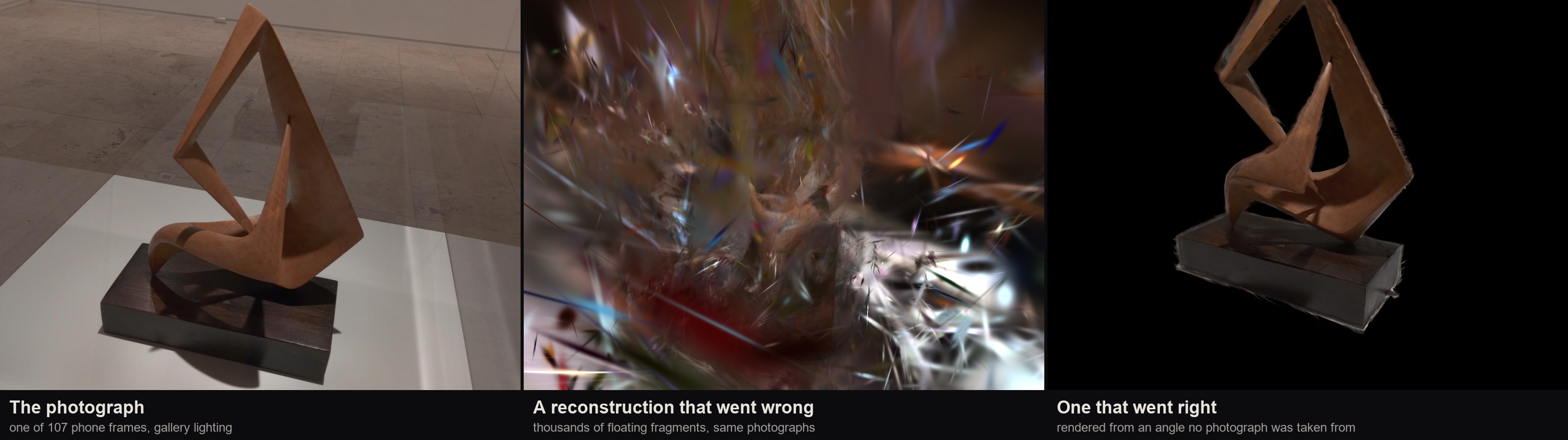
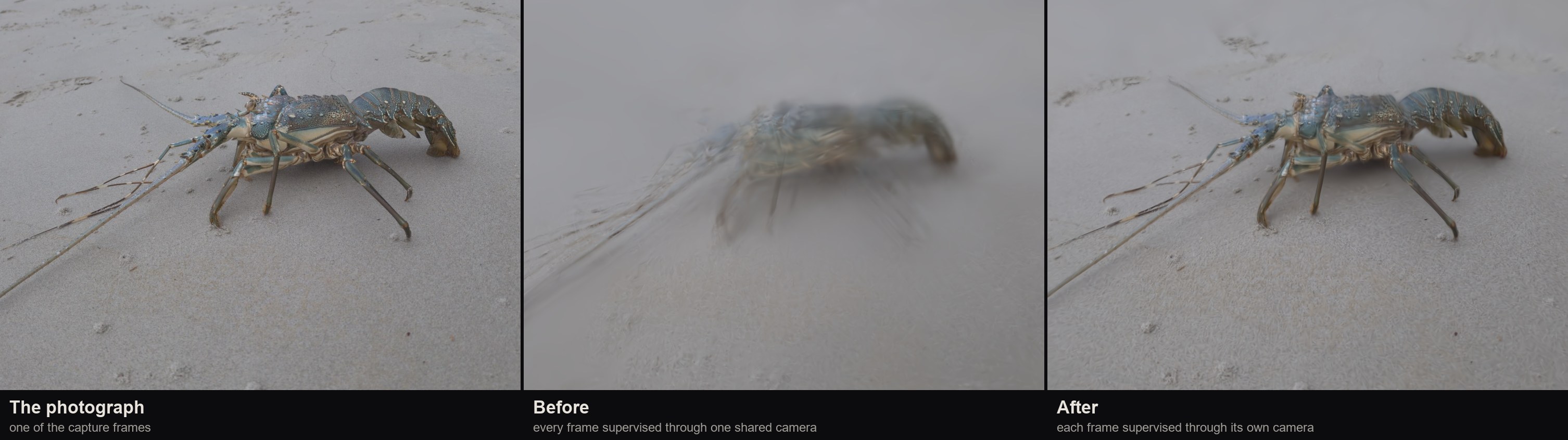
Here’s a couple of images showing progress. Not perfect by any means, but this is the completely automated result of using the app to walk around a sculpture in a gallery and a lobster on a beach.
A career retro
I have spent a career trying my hardest to work on interesting, creative and valuable projects. Sometimes succeeding, sometimes not. The goal has been to work on things I’m happy and excited to tell people about, while supporting a family. I consciously avoided chasing status or money. An early lesson was that the excitement of the idea of more cash or a big title was quickly washed out by the reality of sitting in an office doing something I wasn’t enjoying. A day is a long time, and the next day even longer. It’s been a fun career that I’m proud of.
After a move to a smaller, industrial city, away from the creative industries that fed me literally and creatively, I found my work pool shifting to less interesting work and to industries I’m not hugely excited to be around. The people have been lovely and I’ve been treated well. But I was sinking into a mental and creative hole.
A year off
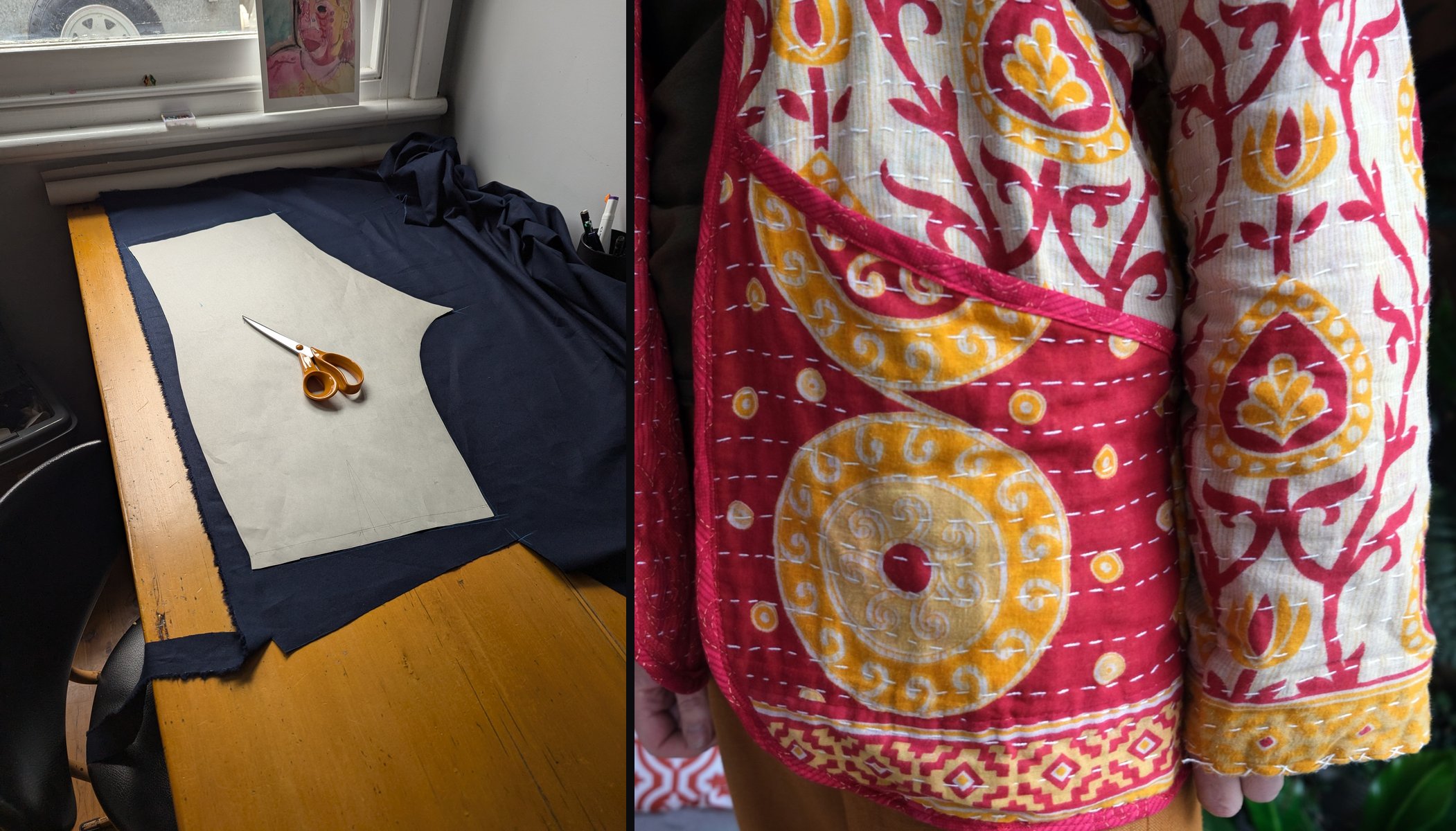
I had the amazing opportunity to take a year off and reassess. I don’t take that sentence for granted. I taught myself to sew. It was amazing to do something physical. But mainly I just did not want to do anything on a computer. In fact, I was not sure I ever wanted to look at a computer again. The goal was to take my brain out of the burnout so it could make better decisions. A stressed brain is a reactive brain.
I contemplated many other career options. Social work and teaching were the two areas that matched my values.
The test
After that year, when I started to pull my portfolio together, I realised that many things I had done in my career I had done on my own time. Because I wanted to. That overlap of creativity and building things. That’s the test: what do you think about when you’re not being paid? It was exciting and joyful to see those projects again. I remembered what I love doing.
That thought process is why I loved making games. How can I transform the world so that people see things differently, or relate to each other in a new way? It’s why I loved teaching and working for Unity. Building things and sharing the joy. It’s not about tech. I don’t care about it. I’m not excited about it for its own sake. I’m excited about what I can make with it, and how people experience that.
Throwing things open
My strategy has been to make things and see where it leads. Most of my work has not been found through job sites and agencies. I kept throwing things out and sometimes they landed. Looking at job sites and planning a career gives me a limited, and often depressing, list of career options. Throwing things open meant I could go beyond my imagination. I would never have imagined or pursued a career where I made games, worked for a start-up in San Francisco and travelled the world for work.
I still strongly believe in this strategy.
Why this, then
When thinking about the overlap of values and skills, I started to revisit previous thoughts I’d had about photogrammetry and cultural heritage. My Sketchfab is full of captures done for love: street art, industrial sites, architectural details. I spent years working with point clouds at scale for the rail industry. I’d just been doing a lot of machine learning work. Then I learnt about Gaussian splatting, and it fitted the whole pile of existing skills very well.
Factum Arte and the Factum Foundation were a huge inspiration. Values-driven, creative, with overlapping skills and goals. They go to a site, train local people, leave the equipment and the knowledge behind, and the facsimile stays in Luxor rather than London. They publish how they do everything, and their value is in the expertise and the execution, not in hiding the process.
What I’m hoping to achieve
I’d really like to look at this as a way to capture objects, not scenes. A sculpture in a regional gallery. An artefact in a historical society’s back room. The thing on the shelf that currently has one flat photograph and a catalogue entry, because a proper 3D scan costs more than the institution’s whole digital budget.
The final product is the thing that ends up on someone’s website. That could be an image, a video, a 3D turntable, or metadata. It is not the splat itself. The splat is infrastructure; nobody should have to know it’s there.
It shouldn’t require lots of money, special equipment or technical knowledge to use. A phone, a person who can walk around the thing, and a protocol a volunteer can follow. That constraint is the whole design, and it’s what the rest of this series is about: getting a phone to take photographs a reconstruction can trust, and getting the reconstruction to be honest about what it produced.
And the value should stay with the people whose object it is. Not captured and taken away, but captured and handed back, in a form they can use.
In the open
I’m going to develop in the open. Because that is throwing things open, and I can’t imagine where it will lead. It may morph into something else, or nothing at all. I just want to be brave enough to share.